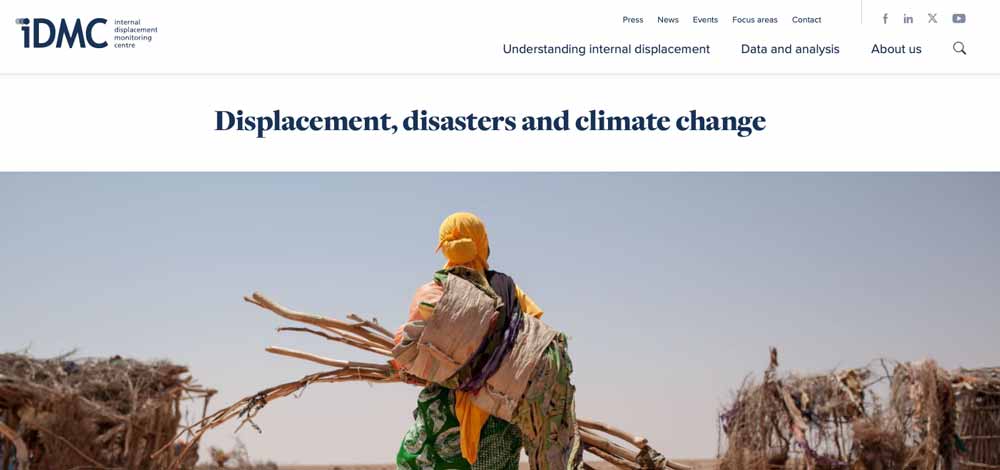
Natural events such as floods, earthquakes and fires force millions of people to flee their homes each year. At the end of 2024, 9.8 million people were living in internal displacement due to disasters. Not all disaster displacement is climate-related, but as climate change continues to make extreme weather events more common and more intense, ever more people are at risk of being forced to flee their homes.
IDMC has been monitoring displacement associated with disasters since 2008. When compiling disaster displacement data, we track weather-related hazards such as storms, floods and wildfires as well as geophysical hazards such as earthquakes, volcanoes and tsunamis. In addition to these sudden-onset disasters, we are conducting research and developing new methodologies to be able to increasingly include new displacements associated with slow-onset hazards such as droughts, desertification, sea-level rise and water salinisation.
Our work on disaster displacement goes beyond monitoring. We conduct research and analysis into what causes a natural event to become a displacement disaster and the effects on both the people they displace and the communities that host them. We also explore what can be done to prevent and respond to disaster displacement and ultimately find lasting solutions for those it affects.