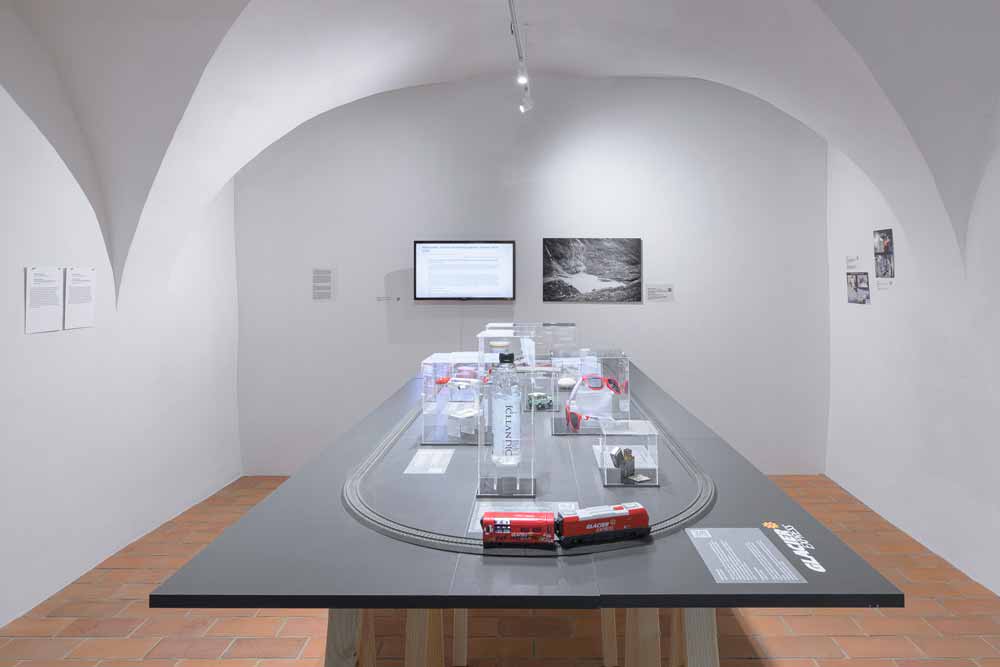
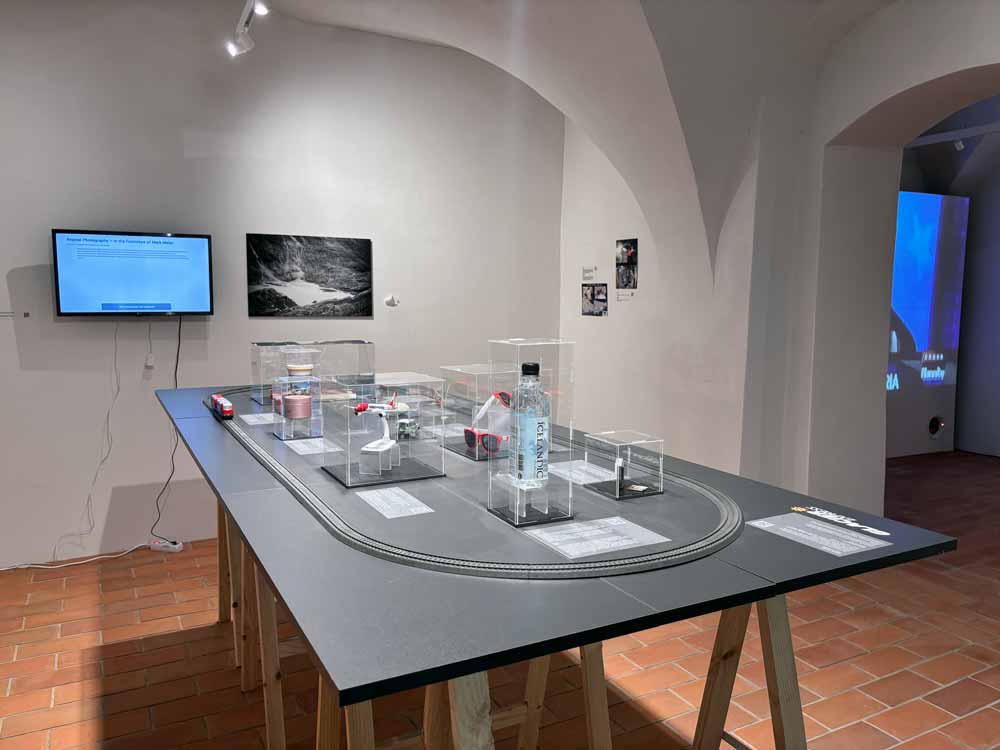
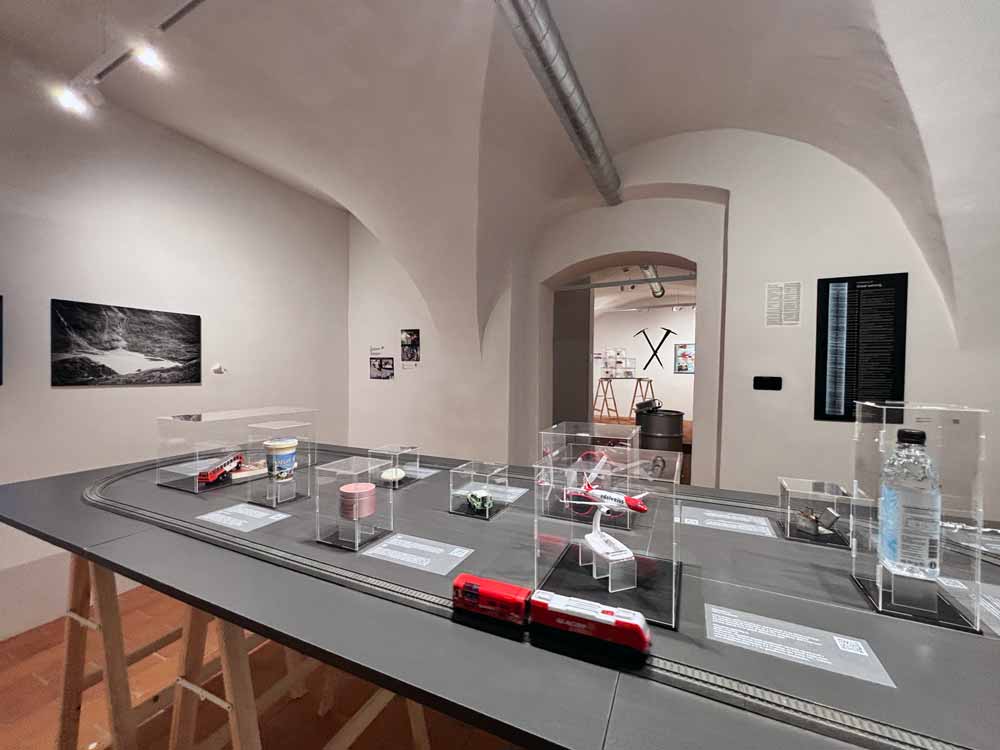
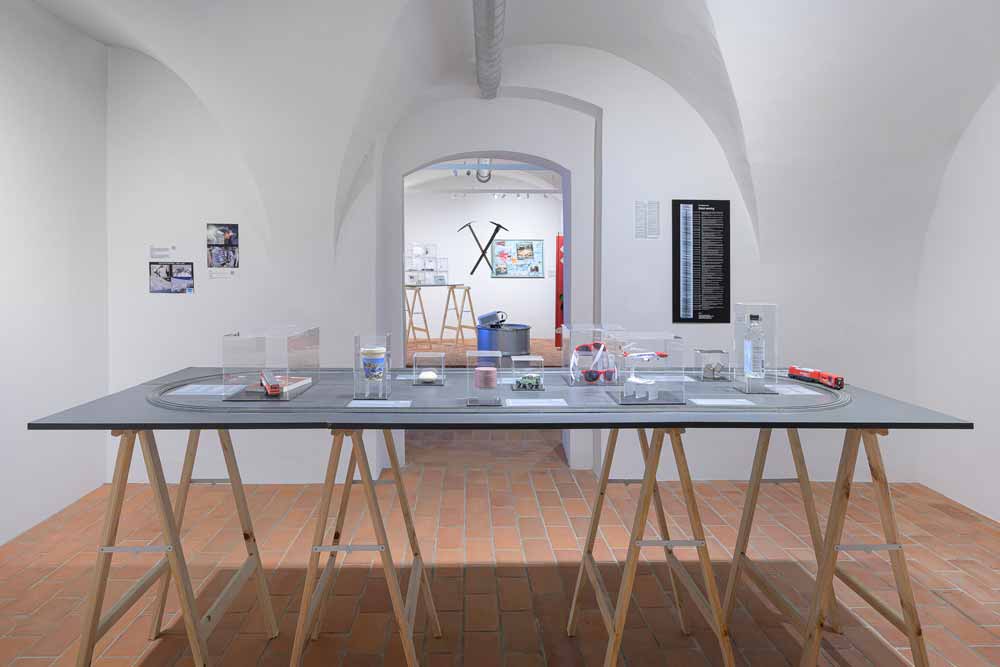
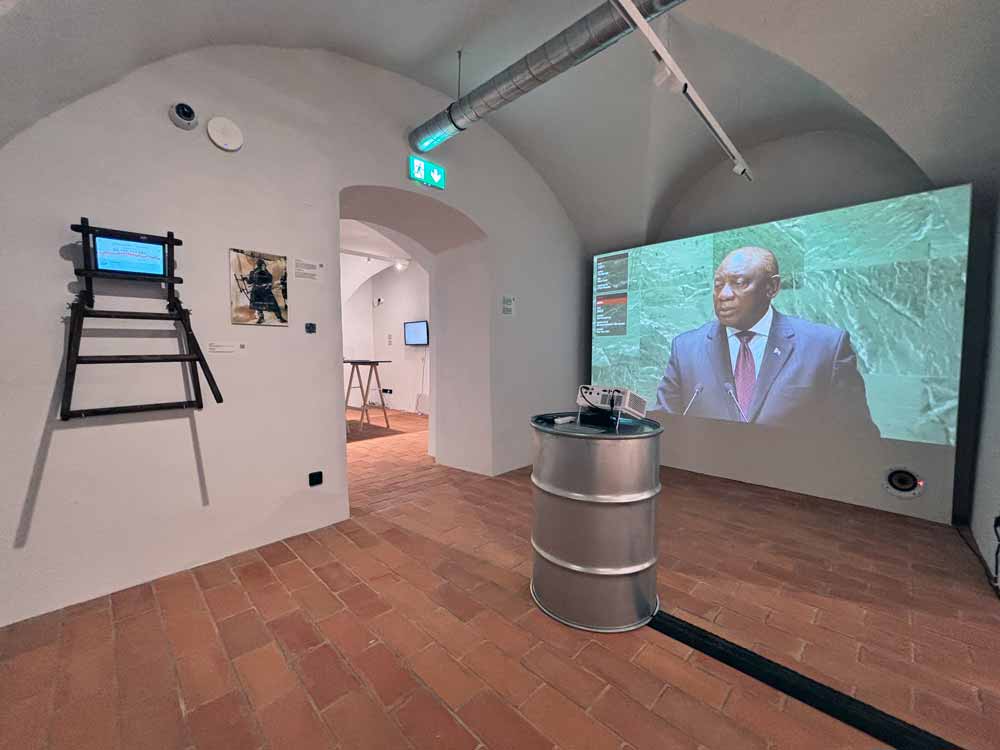
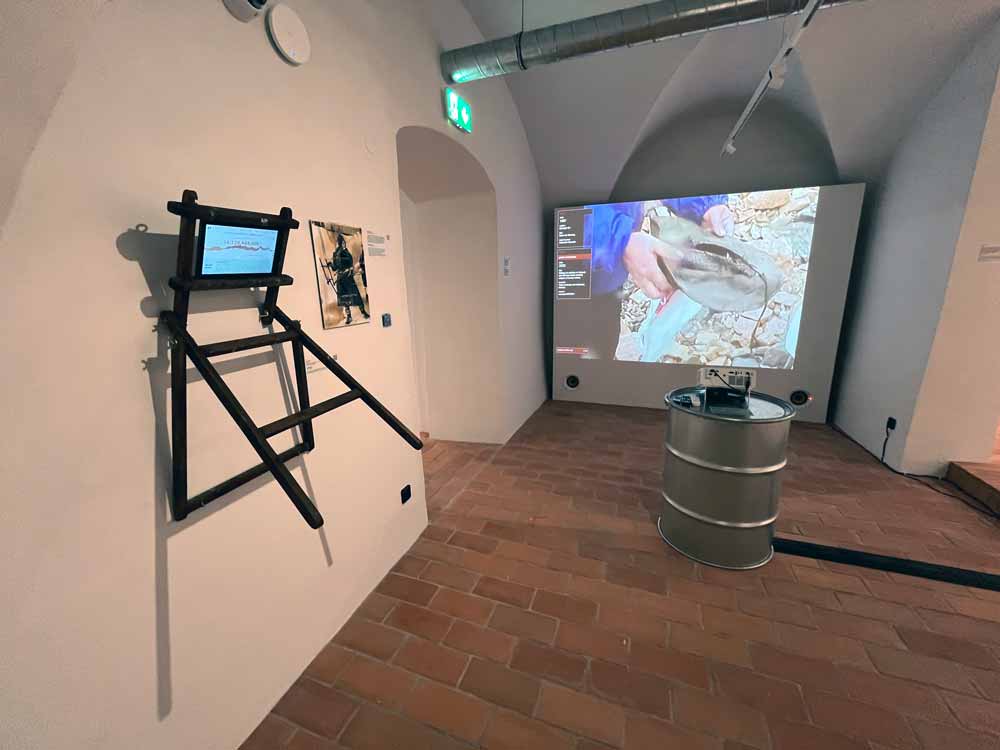
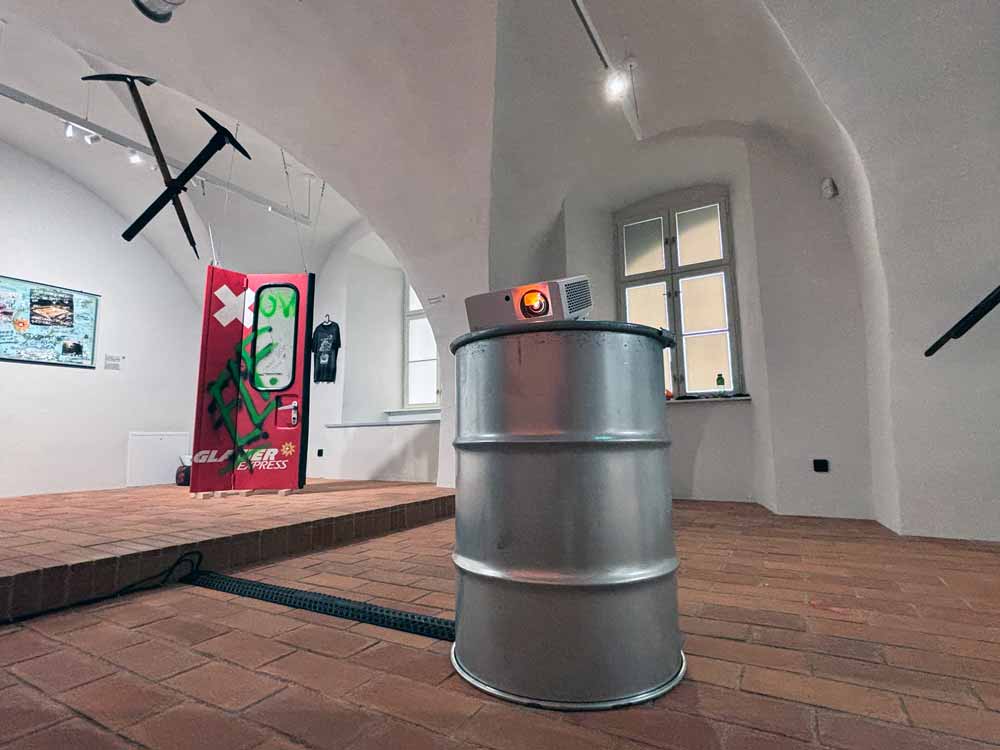
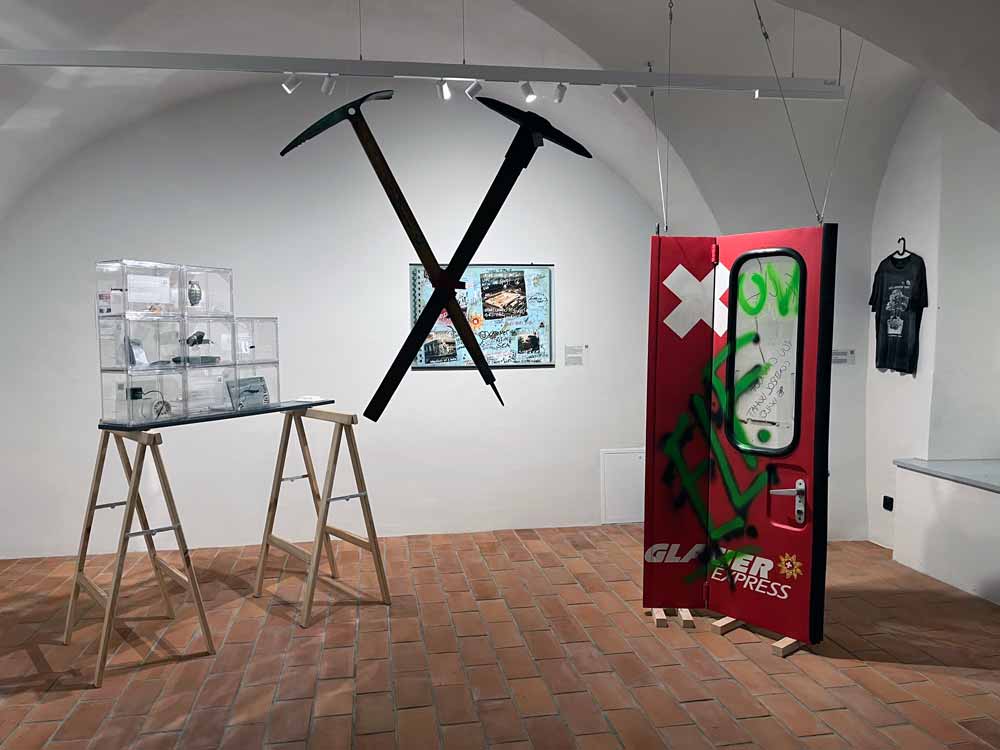
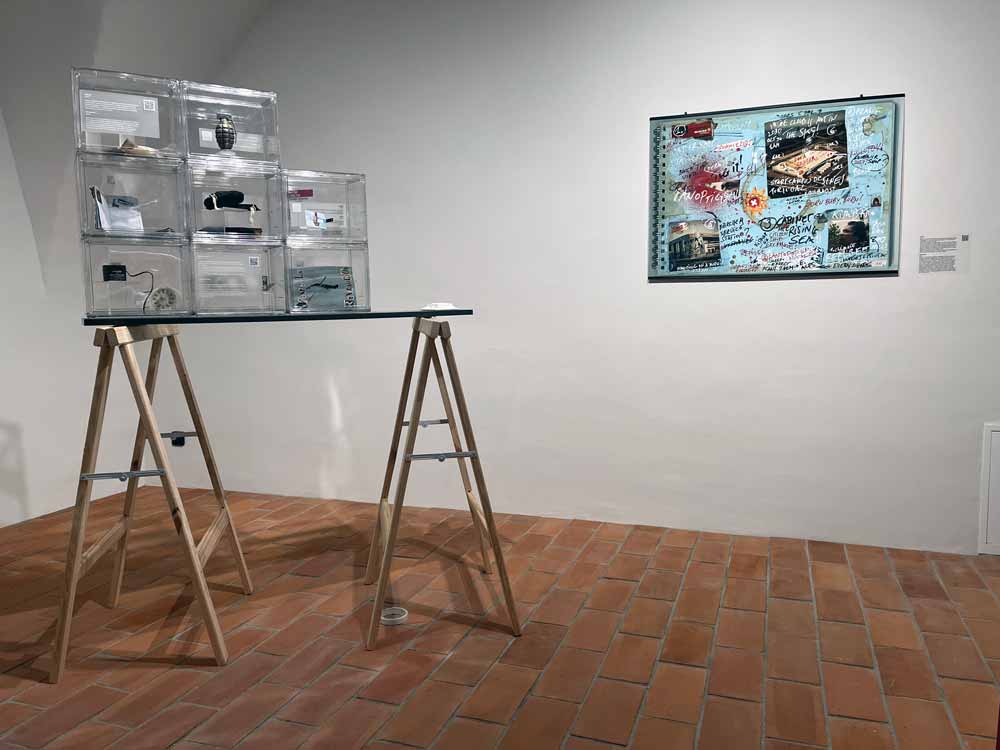
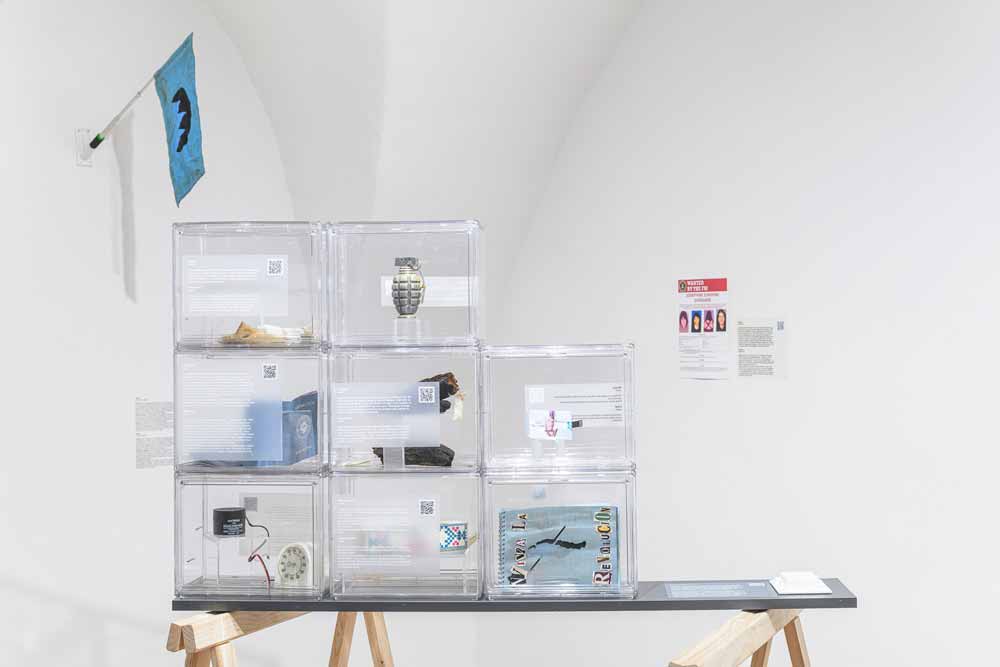
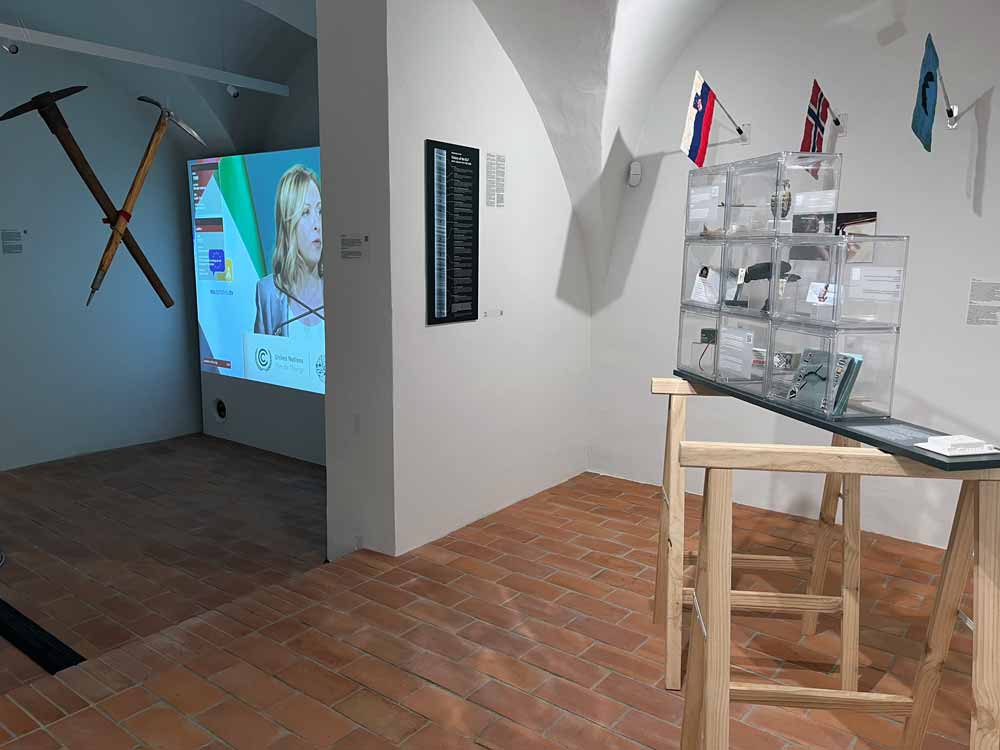
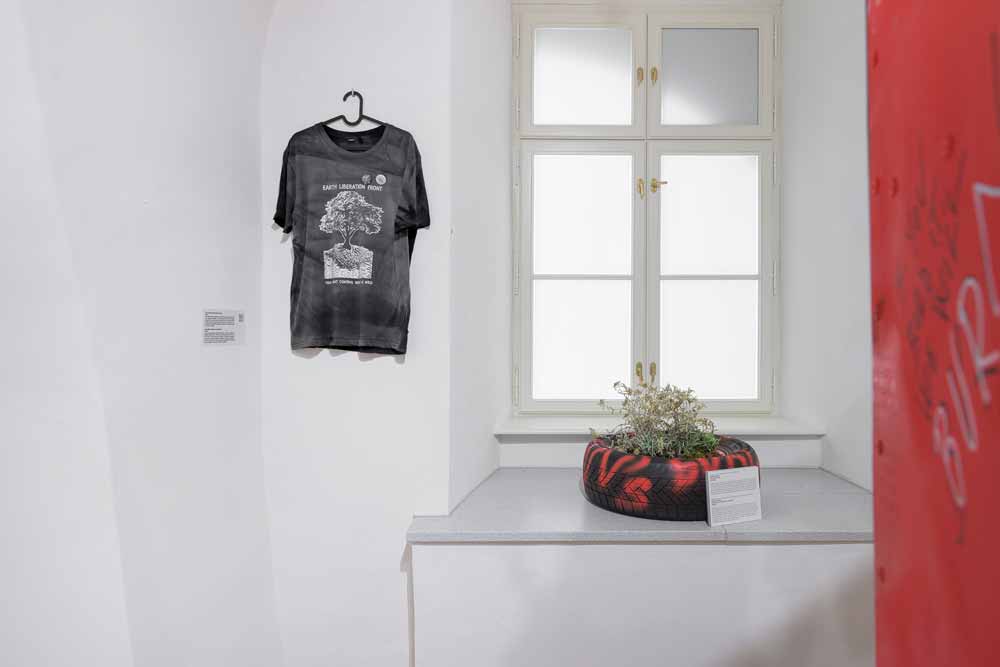
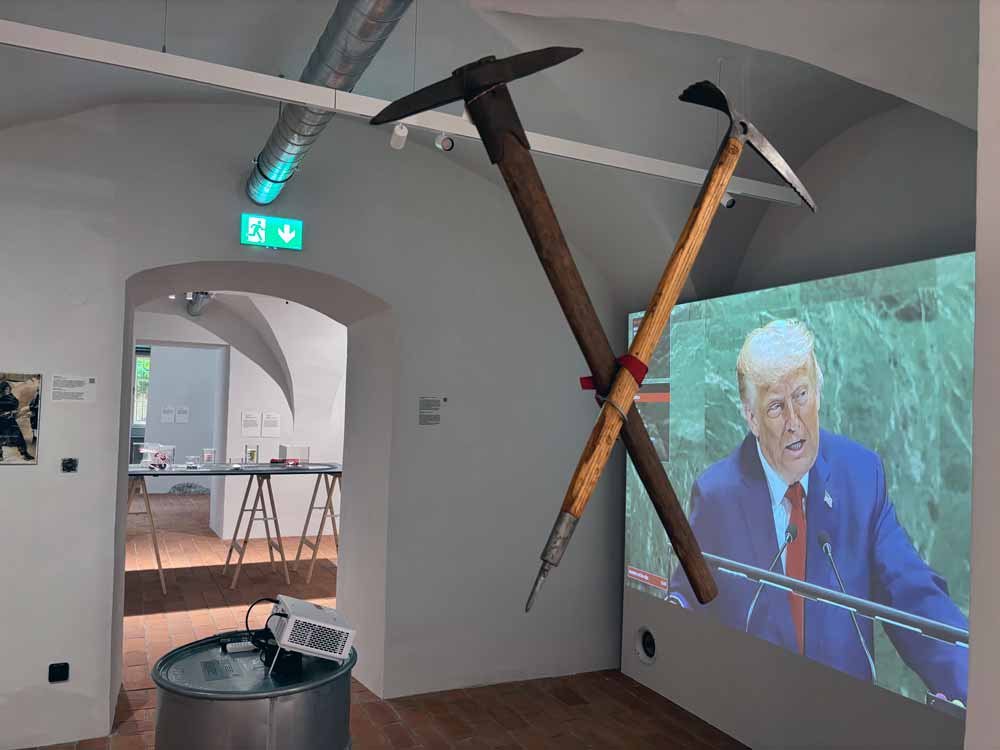
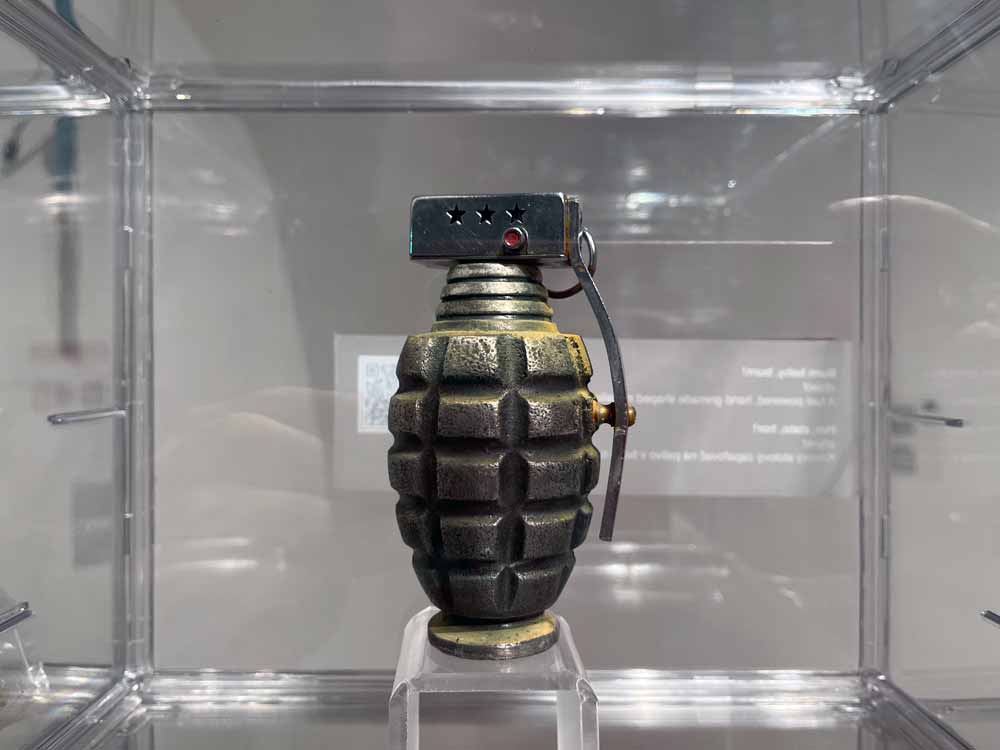
The Sunshine Find combines documentarism and parafiction, presenting an archive of conflicting narratives on global warming while reconsidering the vanished radicalism of the environmental movement. Szabolcs KissPál (1967), whose work critically examines ideological narratives, in this project collaborates with Boróka Prokob (1998), representing a generation shaped by overlapping ecological, economic, and geopolitical crises intensified by the climate emergency.
The project frames global warming as a cultural, political, and ideological battlefield where scientific consensus, denialism, media rhetoric, and economic interests collide. It shows how certain narratives strategically question anthropogenic causation through manipulation and manufactured doubt. Its metanarrative recalls the emergence of glacial archaeology in the 1990s, when melting ice exposed preserved artifacts and organic remains. These discoveries render climate change materially tangible and position this field as a potential source of knowledge, answers, and survival strategies.
Ice cores are read as stratified archives of environmental history, likewise, political, economic, environmental, and media narratives can be understood as layered deposits preserving the traces of successive historical formations. From the emergence of neoliberalism to the successive waves of radical environmental movements, the security paradigms of the War on Terror, and the infrastructures of contemporary digital disinformation, these layers together reveal the genealogy of the present. The project therefore aims not only to archive climate change but also to reconstruct the archaeology of the competing narratives, imaginaries, and ideological formations that have shaped collective responses to environmental crisis – from radical ecological visions to denialism and reaction. In an era marked by epistemic instability, preserving and excavating these discursive archives becomes as urgent as documenting the rapidly disappearing archives of ice that — controversially enough — became a source of knowledge through glacial archaeology.
Beyond the question of how to adapt ourselves to the approaching catastrophe, the only thing we can do is to understand the nature of these narratives, and to eventually choose one of them, and act collectively – before it is too late.
The website presents the project and offers a growing background archive.
Comissioned by:
Trenčín European Capital of Culture 2026
in the framework of the exhibition
Glocal Equality and Hospitality (invalidated ideas?)