Edelweiss 4.
digital print (photography)
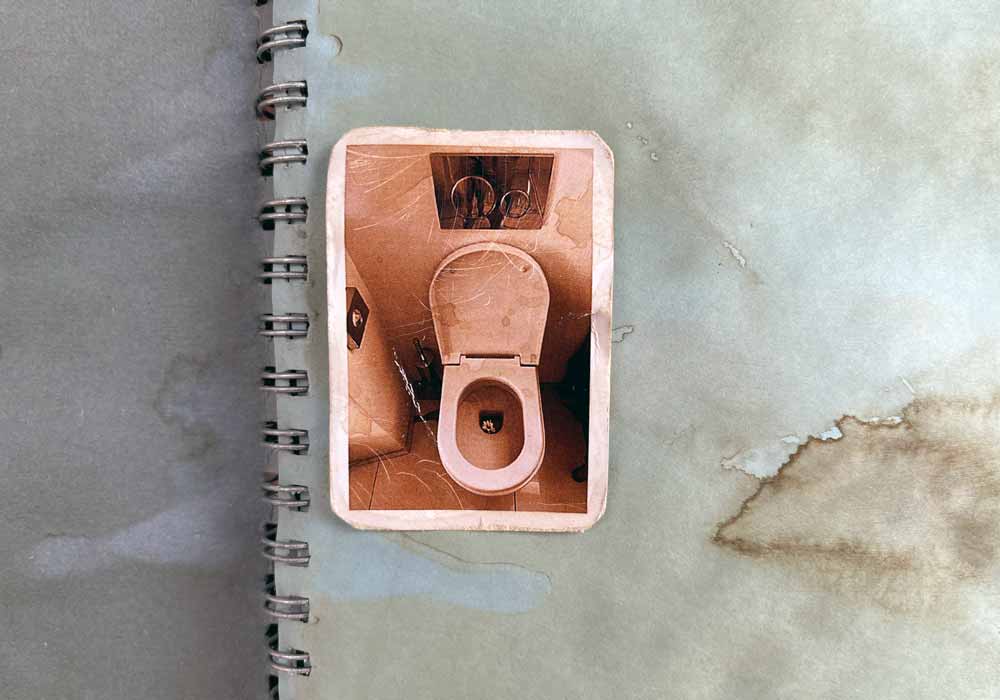
Photography found in the crate, which based on the note on its back it was taken on 17 August 2025 in an apartment of Grand Hotel Bagni Nuovo, Bromio in Central Alps Italy. The luxury tourist facility is situated at less than 9 km in a straight line from the bunker, where the present find was discovered.
OpenAI. (2026). ChatGPT (GPT-5.6) [Large language model]. See prompts at the end
Edelweiss: The Cultural Career of the Alpine Flower
Thermal luxury, glacier-adjacent tourism and a chronological atlas of edelweiss imagery
Scope: The report examines the Grand Hotel Bagni Nuovi at Molina, Valdidentro, near Bormio, from its nineteenth-century origins to its current operation; compares it with selected Alpine hotels established beside or within the visual field of glaciers; and traces explicit tourism and cultural uses of edelweiss from antiquity to the present. It does not provide a botanical or ecological monograph, nor does it independently authenticate the photograph’s handwritten date, the crate narrative, the bunker coordinates or the stated straight-line distance.
Abstract
The correct place and hotel names are Bormio and Grand Hotel Bagni Nuovi. The establishment opened in 1836 after the new Stelvio road increased traffic through the upper Valtellina. Conceived as a more spacious and socially exclusive alternative to the older baths, it anticipated the later Alpine grand hotel by combining therapeutic water, controlled scenery, refined interiors and road access. Unlike the Hôtel du Montenvers or the Grand Hotel Glacier du Rhône, however, Bagni Nuovi was not built at a glacier front: its relation to ice is regional and panoramic. Edelweiss became a tourism symbol mainly in the nineteenth century through alpinism, railway and hotel advertising, postcards, collected flowers, souvenirs, hotel names and planted rock gardens. Scholarship shows that the symbol can sell an Alpine place even where the living plant is absent. The cultural chronology likewise reveals no secure ancient image of edelweiss; its major artistic and commercial career begins with early-modern botanical illustration and accelerates after 1850 through literature, painting, jewellery, decorative arts, film, musical theatre, branding and national display. The object therefore joins hotel luxury, symbolic flora and glacial proximity without collapsing documentary evidence into the project’s parafiction.
Project links and cross-references: Project website · Exhibition-object pages · Supporting archive. Related reports/objects: Container (Mount Scorluzzo shelter); Glacier Express; Edelweiss 1 (soap); Edelweiss 2 (seed souvenir); Edelweiss 3 (airline); Ignite (Grossglockner scenic road).
Contents
1. Object note, place-name correction and evidentiary status
2. Grand Hotel Bagni Nuovi: a short history
3. Luxury hotels and controlled encounters with glaciers
4. Edelweiss in the tourism industry
5. Chronological cultural reference atlas, antiquity–2026
6. Source-critical conclusions and archive cross-references
7. Primary, institutional and cultural records
8. Numbered academic reference list
Appendix: User prompt
1. Object note, place-name correction and evidentiary status
The object label should use “Bormio”, not “Bromio”, and “Grand Hotel Bagni Nuovi”, not “Grand Hotel Bagni Nuovo”. The historic complex stands at Molina in the municipality of Valdidentro, immediately north-west of Bormio. The current operator markets it as QC Grand Hotel Bagni Nuovi.
Documented place | Grand Hotel Bagni Nuovi, Molina, Valdidentro, Province of Sondrio, Lombardy, Italy. |
Documented historical date | The establishment was officially opened in 1836; design and construction began in the preceding decade. |
Object-note date | 17 August 2025. This date is supplied by the note on the reverse of the photograph and has not been independently authenticated. |
Crate / bunker relation | Parafictional project metadata. The report treats the photograph’s recovery from the crate as part of The Sunshine Find narrative, not as verified archaeological provenance. |
Distance claim | The phrase “less than 9 km in a straight line” is retained as object-note metadata. Verification would require precise coordinates for the shelter/bunker and the hotel. |
Primary / institutional evidence links: Lombardy Cultural Heritage record | QC Grand Hotel Bagni Nuovi
2. Grand Hotel Bagni Nuovi: a short history
Bagni Nuovi grew from a much older thermal landscape. The mineral springs around Bormio were used long before the nineteenth century, while the pre-existing Bagni Vecchi occupied a steep site on the route towards the Umbrail and Stelvio passes. By the 1820s the older establishment was physically inadequate for an expanding and more socially demanding clientele.
Date / phase | Documented development |
1820–1824 | Carlo Donegani’s Stelvio road reorganised movement across the high pass and increased the visibility and accessibility of the Bormio baths. The road made the area part of a modern scenic and strategic transit corridor. |
1828–1830 | Local authorities debated financing a new establishment rather than merely repairing Bagni Vecchi. The executive project was completed in 1830 by Giovanni Donegani, Carlo’s son. |
1832–1836 | Construction began in 1832 on a lower, flatter site at Molina. The new baths opened officially in 1836, although finishing and technical improvements continued thereafter. |
Original programme | The building combined bathing facilities, salons, service spaces and hotel accommodation. The stated aim was to provide dignity, elegance, space and comfort for “civil” or elite guests, while provisions retained free access for poor and local bathers in the older complex. |
Later nineteenth century | The property was repeatedly enlarged and modernised. Heritage sources record early electric lighting in 1885; decorative campaigns and extensions gradually gave the interior and exterior the eclectic, historicist and later Art Nouveau character now associated with the hotel. |
Twentieth century to present | After closure in the late twentieth century, the complex was restored and reopened as a hotel and thermal spa. The current operation combines heritage architecture with a contemporary wellness circuit. |
Academic context links: Mountain Grand Hotels at the Fin de Siècle
References: [7], 163–171.
Primary / institutional evidence links: Anna Lanfranchi, “Breve storia ottocentesca dei Bagni Nuovi” | “I Bagni Nuovi e i Bagni Vecchi di Bormio” | Lombardy Cultural Heritage record | Current hotel record
2.1 Thermal water, road access and social distinction
Bagni Nuovi is important because it joins three infrastructures that later became central to Alpine tourism: a modern mountain road, a purpose-built hospitality complex and a designed encounter with the landscape. Lanfranchi’s archival history makes the social differentiation unusually explicit. The new establishment was conceived for comfort and elite sociability, while the older S. Martino building was assigned to free bathing for poor residents and inhabitants of the district. Landscape consumption and bodily treatment were therefore organised together with class separation.
Academic source links: Mountain Grand Hotels at the Fin de Siècle
References: [7], 163–187.
Primary evidence link: Lanfranchi, “Breve storia ottocentesca dei Bagni Nuovi”
2.2 Glacier-adjacent rather than glacier-front
The hotel should not be described as having been built “next to a glacier” in the strict sense used for Montenvers or Gletsch. Its founding logic was thermal and infrastructural: hot springs, the Stelvio road and the Bormio resort economy. Glaciers and perennial snowfields belonged to the wider visual and excursion territory of the Ortles–Cevedale and Stelvio region. This distinction preserves the project’s geography: the hotel is close enough to connect luxury tourism with the Scorluzzo military landscape, yet it does not owe its precise siting to a glacier terminus.
3. Luxury hotels and controlled encounters with glaciers
Selected comparison shows several different relationships between accommodation and ice. Early mountain lodgings transformed difficult sites into fixed viewpoints; later grand hotels translated those viewpoints into elite interiors, transport systems and repeatable itineraries. The examples below are not a complete hotel history but a typology of proximity.
Date / site | Hotel or lodging | Relation to glacier / mountain | Historical function |
1823, Faulhorn, Switzerland | Chalet / later Berghotel Faulhorn | High-altitude summit lodging rather than glacier hotel. | Made a remote scientific and scenic station inhabitable; the hotel also functioned as an observatory and “macro-tool” for mountain science. |
1836, Valdidentro–Bormio, Italy | Grand Hotel Bagni Nuovi | Regional glacier panorama; not at an ice front. | Road-accessed thermal luxury, elite sociability and controlled mountain scenery. |
1830s; enlarged 1858–61, Gletsch, Switzerland | Hotel / Grand Hotel Glacier du Rhône | Originally close to the Rhône Glacier terminus; the glacier has since retreated far upslope. | Pass-road relay transformed into a large scenic hotel; a strong example of a hotel whose name and location depended directly on the glacier. |
1880, Montenvers, France | Hôtel du Montenvers | Built above the Mer de Glace, at a destination already organised around viewing the glacier. | Accommodation for travellers and mountaineers; later integrated with the rack railway and a continually adapted glacier-tourism site. |
1882, Furka Pass, Switzerland | Hotel Belvédère | Direct viewpoint towards the Rhône Glacier and its ice grotto. | Roadside scenic hotel that converted the glacier into an accessible visual attraction; retreat progressively altered the original view. |
Academic source links: The Hotel That Became an Observatory | Mountain Grand Hotels at the Fin de Siècle | A History of Tourism at the Mer de Glace | Seeing the Ice
References: [1], 365–386; [3], 1977–1994; [4], article 8383; [7], 163–187.
Primary / institutional evidence links: Montenvers site history | Rhône Glacier destination record | Hotel Glacier du Rhône | GLAMOS glacier facts
3.1 From viewpoint to catastrophe theatre
The comparison also records a temporal reversal. Nineteenth-century hotels promised stable access to sublime ice; twenty-first-century glacier tourism must add stairs, tunnels, safety works, exhibitions and climate interpretation as the ice retreats. At the Mer de Glace and Rhône Glacier, the gap between inherited hotel imagery and the present glacier becomes part of the attraction. Bagni Nuovi participates more indirectly: it remains a luxury enclave inside a regional landscape where glaciers, military remains and climate evidence are now increasingly read together.
Academic source links: A History of Tourism at the Mer de Glace | Seeing the Ice
References: [3], 1985–1992; [4], article 8383.
4. Edelweiss in the tourism industry
Edelweiss is unusually effective in tourism because a small plant can stand for an entire landscape system: altitude, remoteness, purity, courage, rarity and “authentic” Alpine belonging. Its tourism career is not simply a reflection of botanical distribution. The visual sign often circulates without the living plant and can attach Alpine identity to hotels, routes, transport firms, products or destinations.
Tourism use | Historical and symbolic function |
Alpine-club emblem | From the later nineteenth century, Alpine associations adopted edelweiss badges and logos. Club iconography connected the flower with climbing competence, voluntary risk and organised access to the mountains. |
Railway, hotel and spa advertising | Belle Époque posters placed edelweiss in ornamental floral frames around trains, hotels, spas and panoramic views. The plant signalled altitude and regional authenticity while transport and hospitality sold comfort. |
Postcards and printed souvenirs | From the 1870s onwards, postcards, albums and pressed-flower compositions helped tourists take home a portable Alpine memory. |
Living and dried souvenirs | Tourists picked or purchased flowers; dealers supplied pressed specimens and edelweiss objects. The demand contributed to over-collecting and to early plant-protection campaigns. |
Hotel and chalet names | “Edelweiss” became a widely repeated name for hotels, guest houses, chalets, restaurants and excursion services. Naming gives a site an Alpine identity even when no edelweiss grows nearby. |
Designed vegetation | Rock gardens and hotel alpine gardens allowed cultivated edelweiss to be displayed within resort grounds. The plant therefore became part of landscape architecture as well as souvenir trade. |
National destination branding | Switzerland Tourism used a golden edelweiss mark for almost three decades before replacing it with a “Switzerland” wordmark in 2024. The change demonstrates that the flower had functioned as a destination logo rather than merely a botanical image. |
Aviation | Edelweiss Air, founded in 1995, uses the flower in its name and aircraft livery. The company’s history also names aircraft after regions where edelweiss grows, extending the Alpine sign to global leisure mobility. |
Wellness, cosmetics and retail | Contemporary spas, soaps, cosmetics, seed cups, food packaging and “natural” products use edelweiss to promise purity, resilience and altitude. These uses connect directly to Edelweiss 1 and Edelweiss 2 in the archive. |
Academic source links: Mythos Edelweiss | Symbolic Species as a Cultural Ecosystem Service | Symbolic Entities in the European Alps
References: [2], article 100980; [5], 17–37 and 48–57; [6], 711–730, especially 719–724.
Primary / institutional evidence links: Edelweiss Air company history | Swiss tourism rebrand report, 2024 | Swiss Confederation cultural overview
4.1 The conservation paradox
Tourism helped make edelweiss culturally valuable and physically vulnerable. The desired proof of a difficult climb was a flower removed from its habitat; the souvenir market multiplied that demand. Protection measures and cultivated substitutes did not end the symbol’s circulation. Instead they helped separate the reproducible image from the protected plant. This is why the flower can continue to signify pristine Alpine nature on aviation, cosmetics and hotel branding even when the associated mobility or consumption has no conserving effect.
Academic source links: Mythos Edelweiss | Symbolic Species as a Cultural Ecosystem Service
References: [5], 23–37; [6], 723–727.
5. Chronological cultural reference atlas, antiquity–2026
The list distinguishes botanical depiction from emblematic use. “Abstraction” is described on a five-level scale: Level 1 = direct living specimen or naturalistic depiction; Level 2 = selective botanical naturalism; Level 3 = ornamental stylisation; Level 4 = emblematic or narrative symbol; Level 5 = lexical/conceptual use without necessary visual depiction. Some works combine levels.
5.1 Antiquity to the Enlightenment: uncertain names and botanical images
1. Classical antiquity — leontopodion / “lion’s paw” in Greek botanical vocabulary
Medium: Botanical and medical terminology; no securely identified surviving edelweiss image Abstraction: Level 5 Style / period: Classical natural history
Ancient uses of the word leontopodion referred to more than one woolly plant. It is therefore unsafe to treat the term as proof of a specific edelweiss representation. Antiquity supplies a lexical prehistory, not a secure art-historical depiction.
References: [5], 7–8.
2. 1571 — Pietro Andrea Mattioli, botanical compendium
Medium: Printed herbal illustration Abstraction: Level 2 Style / period: Late Renaissance scientific illustration
Scheidegger identifies Mattioli’s illustrated plant as the first secure early-modern use of Leontopodium for edelweiss. The image translates a local mountain specimen into reproducible learned knowledge.
References: [5], 7–9.
3. Mid-sixteenth century — Conrad Gessner, Historia plantarum manuscript designs
Medium: Botanical manuscript drawing and annotations Abstraction: Level 1–2 Style / period: Renaissance natural history
Gessner produced a detailed edelweiss study and cross-referenced Mattioli and Alpine vernacular knowledge. The drawing is observational, but it also participates in the early construction of the Alps as a field for collecting and comparison.
References: [5], 8–10.
4. 1785 — Karl Erenbert von Moll, Naturhistorische Briefe
Medium: Natural-history and travel prose Abstraction: Level 5 Style / period: Enlightenment travel science
Von Moll recorded the local German name “Edelweiss”. This is the earliest securely documented written use located by Scheidegger and marks the transition from multiple regional names to the later dominant label.
References: [5], 10.
5.2 Romanticism, realism and Alpine nation-making, 1843–1914
5. 1843 — Emma von Niendorf, “Aurikelmärchen”
Medium: Literary fairy tale / travel literature Abstraction: Level 4–5 Style / period: Biedermeier / Romantic Alpine literature
An early literary appearance in which Alpine flowers are personified. Edelweiss enters a moralised floral ensemble rather than functioning as a botanical subject.
References: [5], 58–60 and 72–73.
6. 1861 — Berthold Auerbach, Edelweiss
Medium: Novella / prose fiction Abstraction: Level 4–5 Style / period: German-language poetic realism
Auerbach made the dried flower a maternal keepsake and moral sign. The title helped move “edelweiss” from botanical vocabulary into a portable narrative of loyalty, loss and Alpine character.
References: [5], 58–65.
7. 1865 — Franz Xaver Winterhalter, portrait of Empress Elisabeth
Medium: Oil portrait with star-shaped hair jewellery Abstraction: Level 3–4, contested Style / period: Second Empire court portraiture
The diamond-and-pearl ornaments are star jewels and are frequently read retrospectively as edelweiss. The report retains the comparison as “edelweiss-like” rather than identifying the jewellery botanically. This is a key example of how a later national-floral reading can overwrite an earlier decorative star motif.
Source link: Habsburg heritage record on Elisabeth’s star jewellery
References: [5], 38–39 and 75.
8. 1867 — Wojciech Gerson, Children of Highlanders (Oath of Edelweiss)
Medium: Oil on canvas; genre painting Abstraction: Level 1 and 4 Style / period: Polish Romantic realism / ethnographic genre painting
A naturalistically presented flower becomes the object of a ritual oath among highland children. The painting joins regional costume, mountain identity and moral symbolism.
Source link: Museum collection record
References: [5], 58–74 (literary-symbolic context).
9. From 1870 — Alpine-club badges and emblems
Medium: Graphic emblem, metal badge, printed insignia Abstraction: Level 3–4 Style / period: Historicism and institutional heraldry
The German and Austrian Alpine-club milieu transformed the flower into a sign of organised alpinism. Its regularised star form was suited to logos, badges and printed identity systems.
References: [5], 17–23; [6], 719–724.
10. 1870s–1900 — Railway, hotel and spa posters; illustrated postcards
Medium: Chromolithographic poster, postcard, brochure and advertising frame Abstraction: Level 3–4 Style / period: Belle Époque commercial graphic design
Edelweiss framed panoramic landscapes, trains, resort buildings and spa promises. Designers including Anton Reckziegel used the flower as an instantly legible border between modern transport and “authentic” mountain nature.
References: [5], 23–27.
11. 1880s–1914 — Pressed-flower souvenirs, hotel alpine gardens and rock gardens
Medium: Decorative specimen, souvenir collage and designed planting Abstraction: Level 1–3 Style / period: Victorian / Belle Époque collecting culture and garden design
The plant circulated both as a removed specimen and as a cultivated element in resort landscapes. This is the clearest architectural/landscape-architectural use: the edelweiss was inserted into hotel gardens and rockeries rather than generating a distinct building type.
References: [5], 23–29.
12. 1886 — Ludwig Ganghofer, Der Edelweisskönig
Medium: Popular novel with embedded Alpine legend Abstraction: Level 4–5 Style / period: Heimat literature / popular realism
Ganghofer’s “Edelweiss King” is a protective mountain spirit whose flower mediates danger, rescue and belief. The novel converts the plant into a quasi-mythic guardian of Alpine space.
References: [5], 58–74.
13. c. 1890–1930 — Edelweiss embroidery in reconstructed regional dress
Medium: Embroidery, woven cloth and costume ornament Abstraction: Level 3–4 Style / period: Folk revival / invented tradition
Research indicates that edelweiss ornament on many “traditional” costumes appeared only around or after 1900. The motif helped standardise regional identities for festivals, associations and tourism rather than simply preserving an unchanged vernacular past.
References: [5], 48–57.
14. 1910 — Ernst Moriz Kronfeld, Das Edelweiss
Medium: Illustrated cultural-botanical monograph Abstraction: Level 1–5 Style / period: Late historicist natural and cultural history
Kronfeld assembled botanical, literary, folkloric and symbolic material into a single “biography” of the flower. The book demonstrates that edelweiss had already become an object of cultural historiography before the First World War.
References: [5], 79–85 (bibliographic context).
5.3 War, monument and mass culture, 1915–1978
15. 1915 — Adolph Johannes Fischer, Iron Edelweiss (Eisernes Edelweiss), Enns
Medium: Monumental wooden donation shield / participatory nail sculpture Abstraction: Level 3–4 Style / period: First World War patriotic memorial culture
The flower was enlarged into a public war-fundraising object. Donors hammered nails into the shield, converting an Alpine emblem into a militarised, collective relief surface. This is the strongest documented sculptural example in the chronology.
Source link: Heritage record on the Iron Edelweiss
References: [5], 38–47.
16. 1956 — Sissi – Die junge Kaiserin
Medium: Feature film Abstraction: Level 1 and 4 Style / period: Post-war costume melodrama / Heimatfilm
Franz Joseph risks himself to pick an edelweiss for Sissi. The flower operates as a condensed proof of romantic devotion, aristocratic intimacy and Alpine naturalness.
References: [5], 74–76.
17. 1958 — Almenrausch und Edelweiss
Medium: Feature film Abstraction: Level 4–5 Style / period: Heimatfilm and tourism comedy
The title pairs two Alpine plant clichés, while the plot centres on hotel hospitality, mistaken identity and a luxury suite. Edelweiss is embedded directly in a commercialised mountain-resort setting.
References: [5], 75–76.
18. 1959 — Rodgers and Hammerstein, The Sound of Music
Medium: Stage musical and song Abstraction: Level 4–5 Style / period: Broadway musical theatre
The song “Edelweiss” was written for the stage musical as a fictional Austrian patriotic song. It uses the flower as an intimate emblem of homeland, loyalty and threatened continuity rather than as scenery.
References: [5], 76–78.
19. 1960s–1978 — The Swiss “Edelweiss shirt” and related textiles
Medium: Printed cotton, work shirt and popular costume Abstraction: Level 3–4 Style / period: Post-war folk modernism / commercial vernacular design
The repeated floral pattern became a mass-produced sign of Swiss rural authenticity. Its production history is less ancient than the marketing image suggests; it belongs to modern standardisation of folk style.
References: [5], 48–57.
20. 1965 — The Sound of Music, film adaptation
Medium: Colour feature film and song performance Abstraction: Level 4–5 Style / period: Hollywood musical
The film internationalised “Edelweiss” as a sign of Austria and anti-Nazi attachment to homeland. Its success also shaped Salzburg sightseeing and the tourist consumption of film locations.
References: [5], 76–78.
21. 1970 — René Goscinny and Albert Uderzo, Astérix chez les Helvètes
Medium: Comic album Abstraction: Level 4–5 Style / period: Post-war European bande dessinée and national caricature
Asterix and Obelix travel to Helvetia to obtain edelweiss for an antidote. The flower functions as a humorous shorthand for dangerous Alpine rarity and for Switzerland itself.
References: [5], 48–52.
5.4 Branding, lifestyle and contemporary art, late 1980s–2026
22. Late 1980s–1990s — Michel Jordi “Ethno Watch” and Swiss-Ethno design
Medium: Wristwatch, packaging and fashion accessory Abstraction: Level 3–4 Style / period: Postmodern heritage branding
Edelweiss motifs were recombined with cows, flags and folk ornament in a deliberately commercial “Swissness”. The watch translated rural sign systems into exportable lifestyle design.
References: [5], 48–53.
23. 1995–present — Edelweiss Air name, logo and aircraft livery
Medium: Corporate identity, aircraft livery and service branding Abstraction: Level 3–5 Style / period: Global transport branding
The Alpine flower names a Swiss leisure airline and marks aircraft that carry tourists far beyond the Alps. The symbol transfers ideas of homeland and hospitality to carbon-intensive global mobility.
Source link: Edelweiss Air company history
References: [6], 719–724.
24. 1995–2024 — Switzerland Tourism golden edelweiss mark
Medium: National destination logo and campaign identity Abstraction: Level 3–4 Style / period: Late-modern national branding
The gold flower with Swiss cross operated as a portable destination seal for almost three decades. Its replacement in 2024 by a “Switzerland” wordmark reveals a shift from a floral emblem towards an explicit global brand name.
Source link: Report on the 2024 tourism rebrand
References: [6], 719–724.
25. 2000s–present — Wellness, cosmetics, soap, seed packets, hotels and Alpine merchandise
Medium: Packaging, product design, interiors, signage and souvenir objects Abstraction: Level 2–5 Style / period: Contemporary eco-luxury and heritage marketing
The motif now promises purity, antioxidant resilience, altitude and local authenticity across unrelated products. Its image is often more important than any material quantity of the plant. This field includes Edelweiss 1 and Edelweiss 2 in the project.
References: [2], article 100980; [5], 23–37 and 48–57; [6], 719–724.
26. 2026 — The Sunshine Find, Edelweiss 1–4 cluster
Medium: Objects, maquette, photography, labels and online research archive Abstraction: Level 1–5; documentary/parafictional Style / period: Contemporary conceptual installation and archival art
The four-object cluster moves from soap and seeds to airline livery and hotel photography. Edelweiss is treated not as a timeless national flower but as a mobile sign linking souvenir culture, aviation, luxury accommodation, climate change and the contested provenance of the crate.
References: Project interpretation based on the object group; historical claims elsewhere in this report remain source-separated.
6. Source-critical conclusions and archive cross-references
The chronology does not support the idea of an unbroken edelweiss iconography from antiquity. Ancient terminology is unstable; secure botanical depiction begins in the sixteenth century; major cultural abstraction accelerates only in the nineteenth century. Likewise, the report found no canonical architectural style based on the flower. Architectural use is chiefly applied and environmental: names, façade or interior ornament, signage, resort planting, rock gardens and branded hotel atmospheres. Sculpture is less common than graphic and decorative use, with the 1915 Iron Edelweiss standing out because it monumentalised and militarised the motif.
For tourism, the decisive feature is symbolic portability. Edelweiss can represent an Alpine destination when the plant is absent, inaccessible or protected. Bagni Nuovi performs a comparable spatial operation: it makes a high mountain environment available through thermal water, architecture and controlled views even though it is not a glacier-front hotel. The photograph’s ordinary hotel interior therefore belongs to a larger infrastructure that converts climatic and topographic extremity into inhabitable luxury.
Related object/report | Evidence-based relation |
Container / Mount Scorluzzo | The hotel is regionally close to the First World War shelter that anchors the installation’s glacial-archaeology narrative. The exact distance in the object note remains unverified. |
Glacier Express | Both hotel and scenic railway organise panoramic access while insulating the traveller through comfort, schedules and interior design. |
Edelweiss 1 | Soap uses the flower as an ingredient and wellness sign; Bagni Nuovi provides the thermal-luxury environment in which such purity narratives circulate. |
Edelweiss 2 | The seed souvenir turns conservation and cultivation into a purchasable memory at a retreating glacier visitor centre. |
Edelweiss 3 | The airline transfers the Alpine emblem to global leisure mobility, separating the flower from place while connecting it to aviation’s climate impact. |
Ignite / Grossglockner | The Grossglockner High Alpine Road and the Stelvio road are related infrastructures of motorised scenic access; both bring tourist comfort and climate evidence into the same field. |
Academic source links: Mountain Grand Hotels at the Fin de Siècle | Symbolic Species as a Cultural Ecosystem Service | Mythos Edelweiss
References: [5], 3–78; [6], 711–730; [7], 163–187.
7. Primary, institutional and cultural records
These records support exact dates, current status, individual works or cultural examples. They are not presented as peer-reviewed scholarship and are therefore not included in the numbered academic list.
1. Auerbach, Berthold. Edelweiss. Stuttgart, 1861.
2. Edelweiss Air. “The History of Edelweiss.” Record link
3. Ganghofer, Ludwig. Der Edelweisskönig. 1886.
4. Grand Hotel Bagni Nuovi. Current hotel record, QC Terme. Record link
5. Kronfeld, Ernst Moriz. Das Edelweiss. Vienna: Hugo Heller, 1910.
6. Lanfranchi, Anna. “Breve storia ottocentesca dei Bagni Nuovi.” In Le acque dell’Alta Valtellina. Bormio, 2014. Record link
7. Lombardia Beni Culturali. “Grand Hotel Bagni Nuovi, Via Bagni Nuovi – Valdidentro.” Record link
8. Montenvers Railway. “The History of the Montenvers Site.” Record link
9. Niendorf, Emma von. “Aurikelmärchen.” In Wanderleben am Fusse der Alpen. Heilbronn, 1843.
10. National Museum in Szczecin / wmuzeach.pl. Wojciech Gerson, Children of Highlanders (Oath of Edelweiss), 1867. Record link
11. Switzerland Tourism. “Rhône Glacier.” Record link
12. Swiss Radio and Television (SRF). “Ciao Edelweiss: Schweiz Tourismus gibt sich neues Logo.” 29 April 2024. Record link
13. Austria-Forum. “Kriegsnagelungen,” including the Iron Edelweiss of Enns. Record link
14. The Sound of Music. Stage musical, music by Richard Rodgers, lyrics by Oscar Hammerstein II, book by Howard Lindsay and Russel Crouse, 1959; film directed by Robert Wise, 1965.
15. Sissi – Die junge Kaiserin. Directed by Ernst Marischka, 1956.
16. Almenrausch und Edelweiss. Directed by Harald Reinl, 1958.
17. Goscinny, René, and Albert Uderzo. Astérix chez les Helvètes. 1970.
8. Numbered academic reference list
Chicago bibliography style. Only scholarly books, institutional scholarly publications and peer-reviewed journal articles are included.
1. Aubin, David. “The Hotel That Became an Observatory: Mount Faulhorn as Singularity, Microcosm, and Macro-Tool.” Science in Context 22, no. 3 (2009): 365–386. Persistent link
2. Rüdisser, Johannes, Uta Schirpke, and Ulrike Tappeiner. “Symbolic Entities in the European Alps: Perception and Use of a Cultural Ecosystem Service.” Ecosystem Services 39 (2019): 100980. Persistent link
3. Salim, Emmanuel, Laura Mabboux, Ludovic Ravanel, Philip Deline, and Christophe Gauchon. “A History of Tourism at the Mer de Glace: Adaptations of Glacier Tourism to Glacier Fluctuations since 1741.” Journal of Mountain Science 18, no. 8 (2021): 1977–1994. Persistent link
4. Salim, Emmanuel, Christophe Gauchon, and Ludovic Ravanel. “Seeing the Ice: An Overview of Alpine Glacier Tourism Sites, Between Post- and Hyper-Modernity.” Journal of Alpine Research | Revue de géographie alpine 109-4 (2021). Persistent link
5. Scheidegger, Tobias. Mythos Edelweiss: Zur Kulturgeschichte eines alpinen Symbols. Eine Dokumentation. Zurich and Geneva: Botanischer Garten der Universität Zürich and Conservatoire et Jardin botaniques de la Ville de Genève, 2008. Persistent link
6. Schirpke, Uta, Claude Meisch, and Ulrike Tappeiner. “Symbolic Species as a Cultural Ecosystem Service in the European Alps: Insights and Open Issues.” Landscape Ecology 33 (2018): 711–730. Persistent link
7. Wedekind, Michael. “Mountain Grand Hotels at the Fin de Siècle: Sites, Gazes, and Environments.” JAAAS: Journal of the Austrian Association for American Studies 2, no. 2 (2021): 163–187. Persistent link
Appendix: User prompt related to this report
The prompt is reproduced chronologically as a research-process record. Spelling and punctuation are preserved except for line-break normalisation.
1. The next description refers to the image attached (you don’t need to use it in your report, it is only for your reference), its short descriptive text reads:
Photography found in the crate, which based on the note on its back it was taken on 17 August 2025 in an apartment of Grand Hotel Bagni Nuovo, Bromio in Central Alps Italy. The luxury tourist facility is situated at less than 9 km in a straight line from the bunker, where the present find was discovered.
1. summarise the short history of Grand Hotel Bagni Nuovo in the context of other luxury hotels built next to glaciers
2. make a research on Edelweiss usage explicitly within tourism industry
3. expand the research on the cultural usage of the plant (literature, fine arts, architecture, sculpture, decorative arts, film, theather play etc) across the art history, from antiquity to modernity. Make a chronological list of these references indicating the
– medium, level of abstraction, style, art history periods
2. General remarks:
1. I have been asking you to create individual reports on different topics.
2. Nonetheless these materials should converge into a unity which is the archive itself and the supporting physical installation. This convergence should be based on a synthesys of all of my other topics, questions and criteria raised in all of the other chat sessions, which are all part of the same project the main scope of which is an art installation and a supporting archive that grows by time. The archive is meant for both professional and nonprofessional use, it should be informative within its artistic and pedagogical scope as well.
3. the main line of thoughts of the project departs from panoptic tourism and concludes to ecoterrorism in a narrative line. Therefore all the reports should follow this general direction in their approach and references.
4. The reports we are working on now will all serve as a background research material published on the project website for the set of objects that will be on display, Each object will have its own page (see: https://glacial-archaeology.net/category/exhibition/). See: Szabolcs KissPál – The sunshine find_for translation. I am also adding the brief description of the project’s general concept, see: Szabolcs KissPál – The sunshine find. The website will have a separate but interconnected section for both the exhibition and the supporting archive. https://glacial-archaeology.net/an-archive-of-narratives-on-global-warming-copy/ Inspect the site while note that it doesn’t have its final structure yet!
5. the scope with the reports is to produce a set of background research material for each object in part that should refer to each other, and should be unified in their narrative and typographic structure, tone, and scope. Pay attention to snychronise the focus points of different partial research tasks when possible with cross references!
6. I am attaching two of your previous reports (noahs_ark_expeditions_1959_1990_academic_sources_new_tab_links.docx, Container_Mount_Scorluzzo_WWI_Shelter_Research_Report). Please develop and and apply to these reports a uniform structure both content wise and in formal aspects while mostly keeping their original content.
7. Main further formal criteria:
– you should always start with an abstract summarizing your finds in a text no longer than 200 words.
– you should always enlist at the very end of the document all my prompts related to that topic
– the external links should always open in a different tab
– you should be using only valid, peer reviewed academic sources listed and numbered at the end of the documents
– you should apply a somewhat unified narrative structured and a unified formatting (including typeface styles, subtitles structure, etc.
8. – note and memorise the above in your cross-chat memory for rurther tasks